
Egg Chair RFQs: Reconcile the Size Fields
For an egg chair RFQ, request a measurement map that separates the assembled chair, seat basket, support base and packed goods. Give every number a named object, unit and measurement endpoint. Link the map to one selected version and a dated drawing. This lets buyers compare quotations without confusing a seat dimension with the space occupied by the complete stand.
Use the catalogue to identify the question
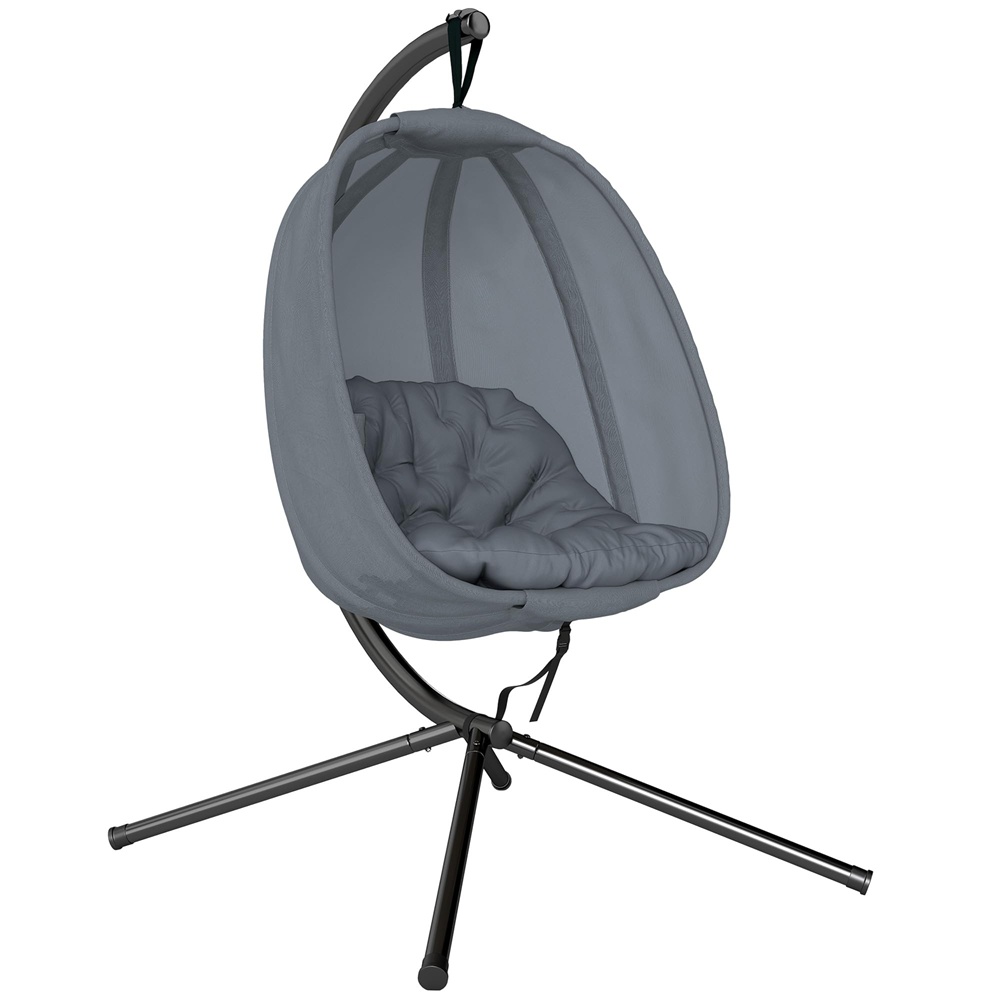
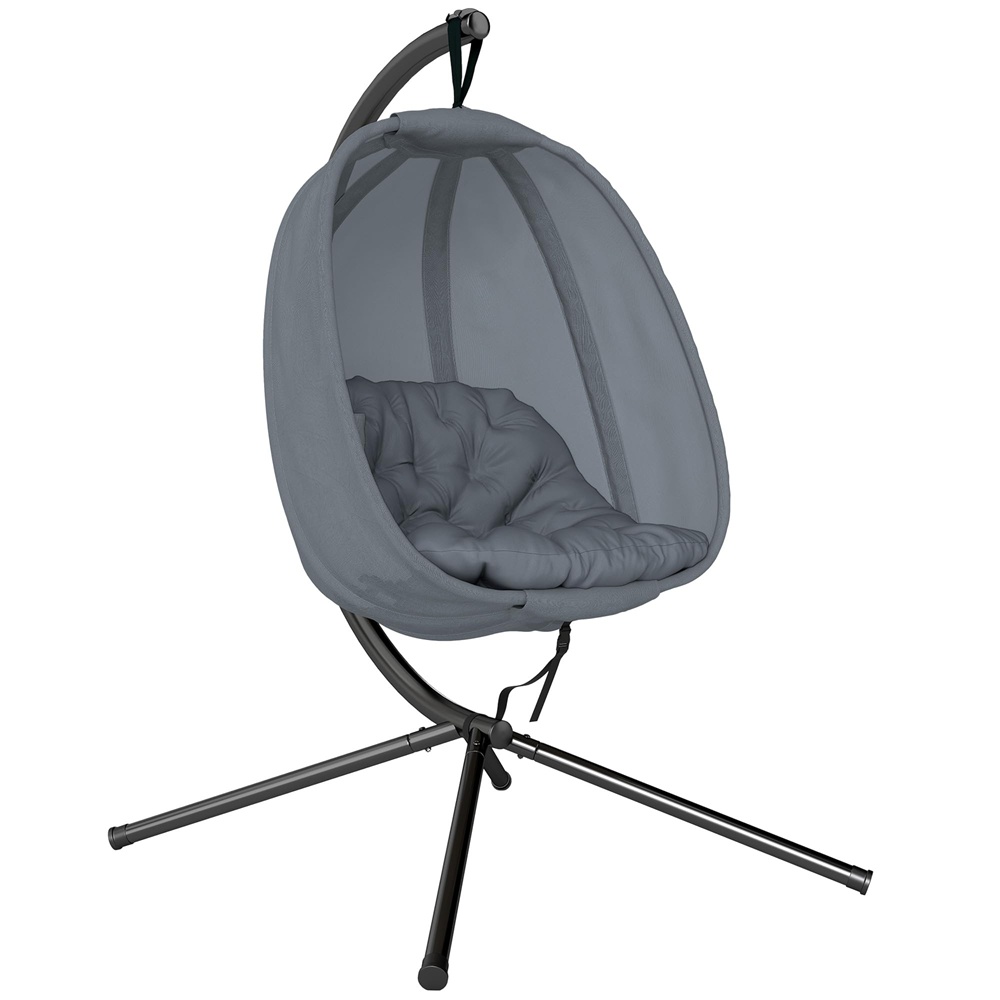
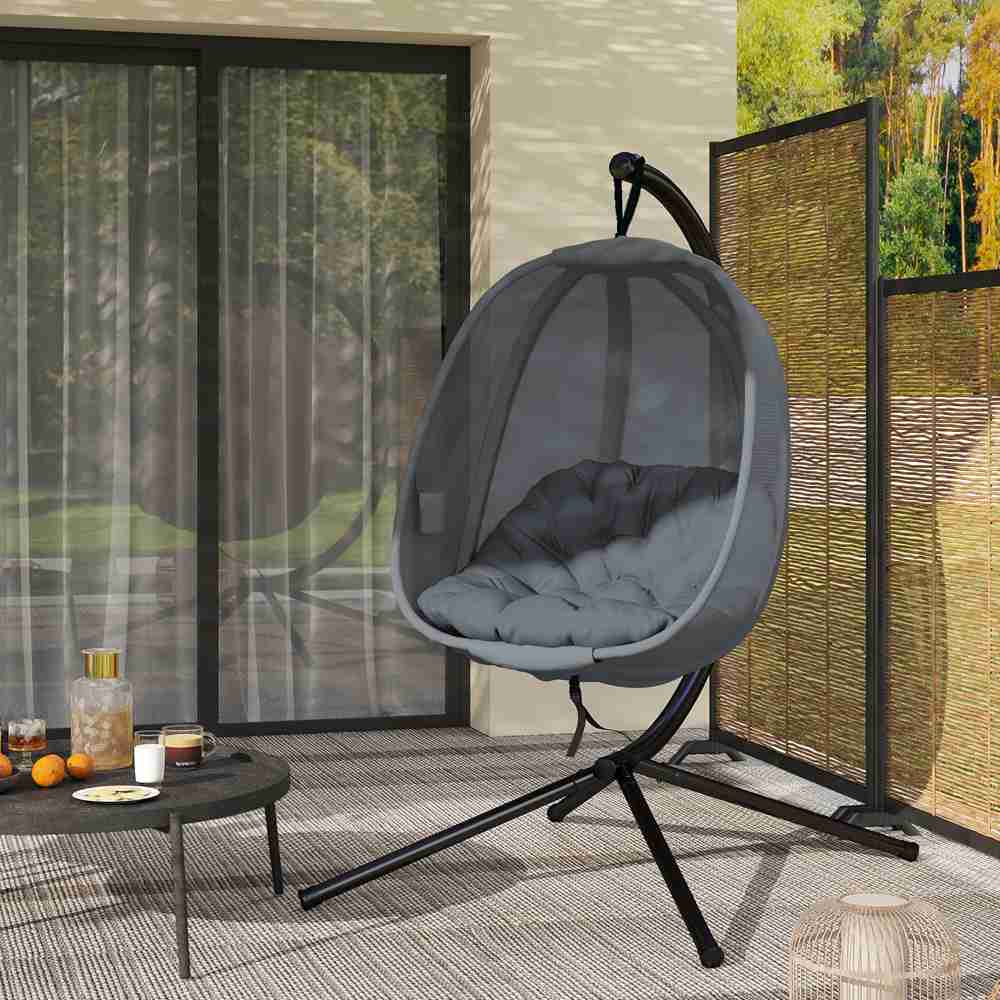
The Egg Chair Grey product page shows an enclosed grey seat, a cushion and a freestanding hanging support. The page presents size wording in a descriptive paragraph and a separate product-dimensions line. Those fields do not label every measurement endpoint in the same way. A buyer should therefore ask what each figure describes before copying it into a quotation comparison or customer listing.
The catalogue is a reference for identifying the offered appearance. It is not a substitute for a measurement drawing tied to the selected order. Keep a copy of the page, mark the precise product URL and ask the supplier to identify the version being quoted. The product directory includes several egg-chair colours and other hanging-chair families; a similar silhouette does not establish interchangeable dimensions or parts.
Separate the objects before collecting numbers
Start a quotation worksheet with separate rows for the assembled item, the seat basket, the cushion, the stand and the shipping configuration. Ask which components are included in the quoted unit. The supplier should say whether a stated chair size includes the support, whether the cushion is in place and whether any removable part is excluded. Leave a row unanswered when its scope has not been confirmed.
A buyer comparing two offers may otherwise put a basket width from one supplier beside an overall stand width from another. Both numbers can be correctly transcribed while the comparison is still misleading. The purchasing task is to make the objects match first. Do not correct the catalogue by guessing which field is newer, or replace a missing stand footprint with an estimate made from a perspective photograph.
Give every dimension a measurement definition
For the assembled reference, ask for height, width and depth with the endpoints marked on the drawing. For the base, request the maximum occupied footprint as a separate field. For the seat basket, ask whether the quoted size describes the outer frame or a usable seating area. Cushion dimensions need their own stated condition; they should not be silently treated as rigid-frame dimensions.
Keep units explicit in every row, even when the worksheet uses one preferred unit. Where a supplier provides another unit, retain that original response and place any requested conversion in a separate column for review. Also ask how the supplier identifies the measuring orientation and the sample revision. A table with labelled endpoints is more useful than several unlabelled numbers collected from different sales documents.
- Identify the selected catalogue item, quotation version and included components.
- Name the measured object and the start and end points.
- Record the unit, orientation and measurement condition.
- Request supplier confirmation before treating an unresolved field as agreed.
Build a measurement map for the RFQ
The following schedule gives buyers and suppliers a common place to record answers. It does not supply dimensions for Egg Chair Grey or establish that another catalogue variant has the same geometry. Add the actual supplier response, its supporting drawing and the buyer decision to the purchasing file. A response becomes an approved order field only after the responsible parties have agreed its scope.
| Object | Requested field | Question to resolve |
|---|---|---|
| Complete assembly | Overall height, width and depth | Which components and endpoints are included? |
| Stand and base | Maximum occupied footprint | Does the drawing show every projecting foot? |
| Seat basket | Outer width, depth and height | Are these frame dimensions or seating-area dimensions? |
| Cushion | Separate size and stated condition | How is its shape positioned when measured? |
| Packed goods | Carton dimensions and component allocation | Which parts are in each carton of the quoted configuration? |
| Revision record | Product reference and drawing date | Does the quotation identify the same selected version? |
Keep the drawing, sample and quotation connected
Send the same annotated worksheet with each request for quotation. Ask the supplier to return a response against that worksheet rather than a replacement list with different headings. Retain the original response alongside any clarification. When a sample is available, record its identity and compare its measured fields against the proposed drawing using the agreed procedure. A sample observation does not automatically cover every future variant.
If a response changes the stand, cushion or packing arrangement, mark which worksheet rows need review. Do not carry forward earlier measurements solely because the product name or colour stayed the same. For an order containing more than one version, use a separate mapping for each distinct configuration. This keeps purchasing, merchandising and receiving teams from working with different interpretations of one shared product title.
Keep other product claims in separate fields
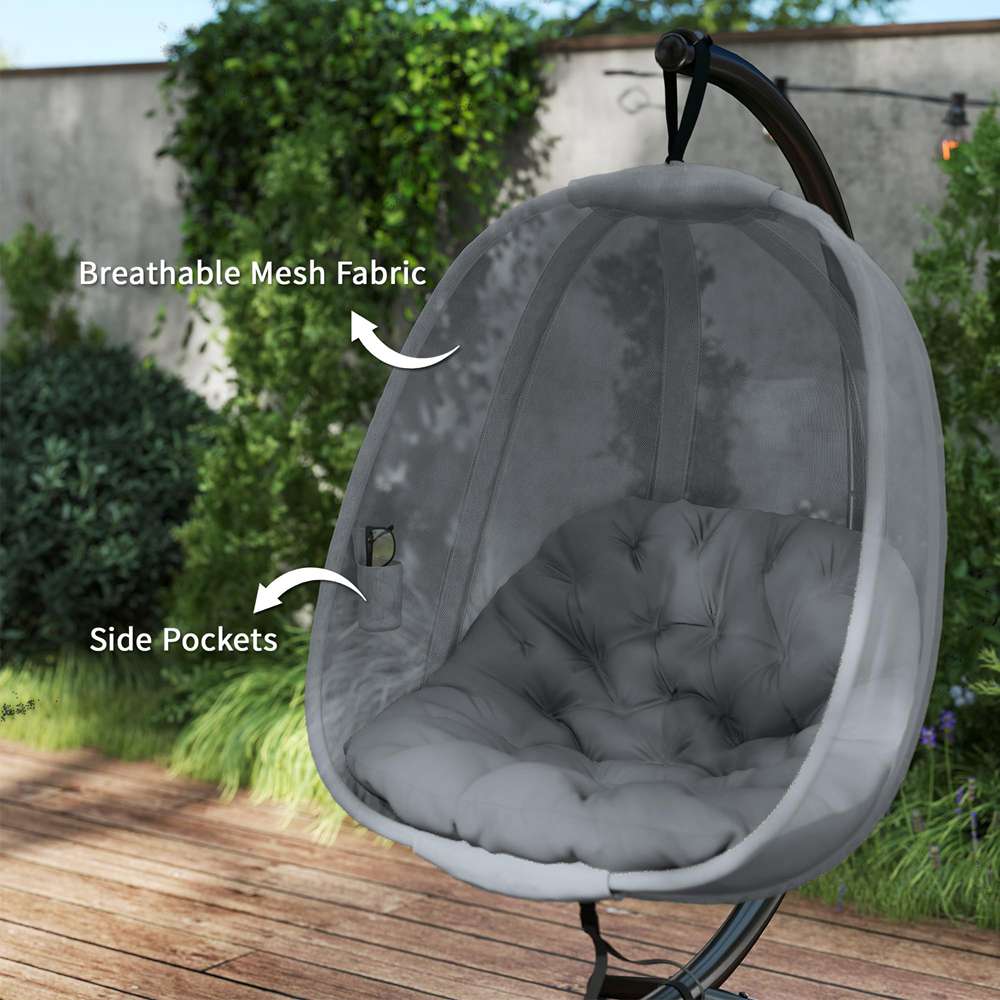
A measurement agreement answers a size question. It does not verify material composition, load capacity, fabric performance, commercial-use suitability or exposure to weather. The catalogue includes descriptive wording about several of these subjects; request the relevant supplier confirmation and supporting documentation separately. Never use the scale of a catalogue scene, the presence of a cushion or a printed fabric annotation as evidence for those claims.
Packed size is also distinct from assembled size. Request the actual packing proposal and identify which components belong to each carton before using the figures for freight planning. A visible stand does not establish that it folds, how it is disassembled or how many units fit in a shipment. Pricing, order quantities, availability and delivery commitments should be confirmed in the supplier quotation for the requested configuration.
Frequently asked purchasing questions
Which dimension should a buyer copy from the product page?
Keep the page wording as a reference and ask the supplier which object and endpoints it describes. Use the confirmed drawing and quotation field for the selected order; do not silently choose between differently labelled size statements.
Can a catalogue photograph establish the stand footprint?
No. Perspective, scene composition and hidden edges prevent a photograph from serving as a dimensioned footprint drawing. Request a labelled base view and keep placement or movement clearance as a separate question for the responsible reviewer.
Do different egg-chair colours share one measurement map?
That requires supplier confirmation for the actual versions. The directory shows several colour and design names, but the names alone do not prove that frames, cushions, supports or packaging are identical.
Are shipping dimensions interchangeable with assembled dimensions?
No. Ask which component allocation and packing arrangement the shipping figures describe. Retain assembled, component and carton measurements in separate rows so quotation comparison and freight planning use the appropriate information.
What should accompany the first supplier enquiry?
Include the exact product URL, selected appearance reference, intended order configuration and an unfilled measurement schedule. Ask for a dated drawing, clear units and confirmation of included components. Keep unconfirmed requirements visibly open until a response has been reviewed.
Use this measurement map alongside the other purchasing questions in our blog. To discuss a selected catalogue version, send the product link and your worksheet through Changxiang Household’s contact page. A clear request helps the supplier address the size fields that matter to your purchase without turning incomplete catalogue information into an assumed specification.