
Egg Chair Cushions: Define the Sample Set
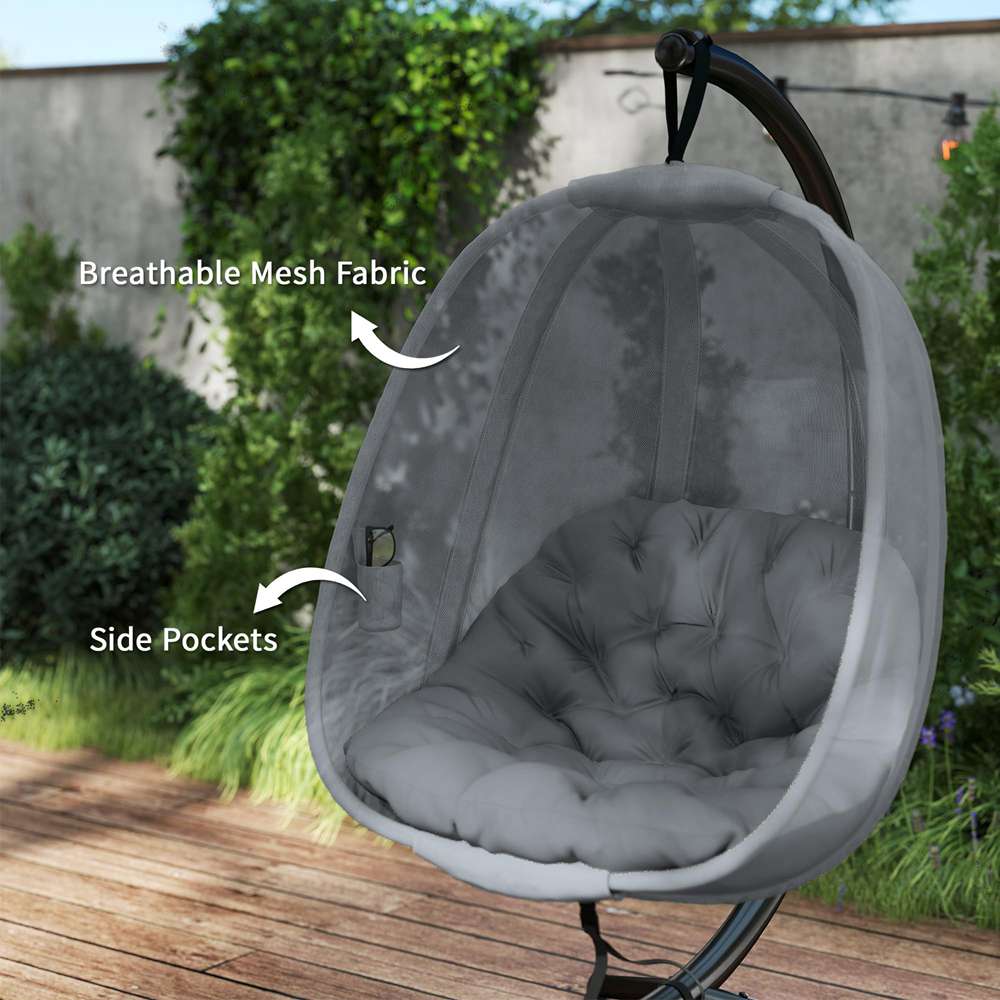
The grey catalogue chair includes a visible padded cushion. Ask the supplier to identify the cushion assembly covered by the sample request.
An egg chair cushion sample request should identify the complete padded assembly first, then list any cover, insert or material swatch you want to examine separately. Ask the supplier which items can actually be supplied and give each requested item a clear reference. The result is a sample set with a defined purpose, rather than a parcel of similar-looking pieces whose relationship to the ordered chair is unclear.
The Egg Chair Grey product listing shows a cushion within the hanging seat. That provides a useful starting appearance reference for a wholesale inquiry. A photograph alone does not tell the buyer whether a cover opens, an insert can be removed or a cushion is offered separately. Those are practical questions to settle when arranging samples.
Name the complete assembly before its possible components
Start the sample sheet with the cushion as it would be supplied for the selected chair. Include the product link and a marked catalogue picture showing the area you mean. Ask whether the sample is the complete padded item, a display sample or a partial piece. If the seller uses a particular component name, place that name beside your own description so both teams can recognise it.
Add separate rows for a cover, insert or other piece only where you need an answer about that component. Mark these rows as requested or awaiting confirmation. Do not turn a request for a separate cover into an assumption that the cushion has a removable cover. The supplier can confirm the offered construction and explain which sample items it can provide.
Give every requested item a decision to support
A complete cushion sample can help the buyer review the appearance and its relationship to the chosen chair. A separately offered cover can help the team examine that specific component. A swatch serves a narrower colour or surface discussion. Write the intended decision beside each item so purchasing does not order several samples that all answer the same question while leaving another question unresolved.
For example, a buyer may label requests Cushion A, Cover A and Swatch A. These are buyer-created references, not supplier model numbers. Ask the supplier to return its product or component reference against each confirmed row. If only a complete cushion is available, the sheet should say so clearly, allowing the buyer to decide whether that sample is sufficient.
The supplied catalogue image includes cushion and fabric annotations. Use it to point to the area under discussion, while confirming the offered sample components directly.
Make colour references travel with the sample
Use a physical colour reference where colour selection matters to the order. Record whose reference it is and how the supplier identifies the proposed match. Keep the reference swatch with its sample label. A grey chair in a catalogue scene helps identify the listing, but lighting, background and screen settings make the picture an incomplete colour agreement.
When reviewing more than one option, avoid shorthand such as “the darker one” after the samples leave the meeting table. Put the selected label into the decision record and include a photograph of that labelled item. If a swatch is sent without a complete cushion, ask how it relates to the actual proposed cover material and selected cushion version.
Sample request | Question for the supplier | Decision to record
Complete padded assembly | Which cushion version and chair listing does it belong to? | Confirm the exact sample identity
Cover, if separately offered | Is it supplied as a separate item, and what is included? | Accept the confirmed scope or revise the request
Insert, if separately offered | Which complete cushion does this component belong to? | Keep the component relationship identified
Colour or surface swatch | Which offered material and colour reference does it represent? | Record the selected physical reference
Labels and packing | How will the sample items be identified in the parcel? | Match every received piece to the request
Sample outcome | Which comments apply to which labelled item? | Approve, request changes or leave a specific question open
Review the cushion in the selected chair context
When a complete cushion and the relevant chair are available, review how the cushion sits in that particular seat. Record orientation, visible coverage and any area the buyer wants clarified. If the sample arrives without the chair, keep the fit question open and ask for an appropriate supplier demonstration or another agreed check. A favourable photograph should not be treated as confirmation for a different chair frame.
Keep the sample review focused on the purchase decision. A visible seam, attachment detail or opening should be described as observed, with a close photograph if useful. Ask for care or handling information applicable to the supplied version. Do not assume a cleaning method, interchangeable insert or particular exposure performance simply because the item is sold with an egg chair.
This angled catalogue scene shows the cushion in a chair context. It supports an appearance discussion, rather than establishing fit for other chair versions.
Close the sample record item by item
On arrival, check the parcel contents against the supplier-confirmed sample list. Keep a distinction between an item not supplied and an item supplied but still awaiting review. Ask the supplier about a substitution before carrying its appearance into an order decision. This prevents a convenient alternative swatch from quietly becoming the reference for a different cushion assembly.
Use a short outcome statement for each labelled item: accepted for the stated purpose, revision requested or further information needed. List a requested change against the exact item reviewed. If a revised sample is sent, retain the earlier label and decision so the purchasing team can see which version should guide the order.
Keep the confirmed sample list and the parcel contents record together.
Return comments against the same labels used on the physical pieces.
Confirm any separate-component availability, price and supply arrangement in writing before ordering.
Send the selected product link and sample list through Changxiang Household’s contact page. Further purchasing articles can support the wider inquiry, while the labelled sample set provides the specific evidence for the cushion decision.
Frequently Asked Questions
Does a cushion photograph prove that the cover is removable?
No. Ask how the offered cushion is constructed and whether a separate cover is available. Keep the request conditional until the supplier confirms the component and its supply scope.
Is a fabric swatch the same as a cushion sample?
It supports a narrower review of the represented material or colour. Identify what it represents and arrange a complete assembly sample when the decision requires the whole cushion.
Can one approved cushion sample cover every egg chair colour?
Link approval to the actual cushion and chair version reviewed. Extend it to another option only after the supplier confirms the relevant relationship and the buyer accepts that scope.
Hanging Egg ChairsCushion SamplesComponent SourcingSample ApprovalWholesale Procurement