
How to Choose Commercial Outdoor Hanging Chairs (2025 Guide)
When outfitting a commercial patio, hotel terrace, resort lounge, or restaurant outdoor seating area, the furniture you select directly impacts guest experience, operational efficiency, and your bottom line. Outdoor hanging chairs have surged in popularity as statement pieces that combine comfort with visual appeal—but not all hanging chairs are created equal. For procurement managers, hospitality directors, and retail buyers, choosing the right wholesale outdoor hanging chairs requires a strategic approach that balances aesthetics, durability, safety, and cost. This guide walks you through the critical factors to consider before placing your next bulk order.
1. Why Patio Projects Need Commercial-Grade Outdoor Hanging Chairs
Durability vs. Residential Models
Residential hanging chairs are designed for occasional use in protected environments. Commercial patios, by contrast, face continuous use, harsh weather, and heavy foot traffic. Commercial-grade outdoor hanging chairs are constructed with reinforced frames, industrial-grade fasteners, and UV-stabilized materials that withstand years of exposure to sun, rain, and temperature fluctuations. Choosing residential-grade products for commercial use leads to premature failure, safety liabilities, and costly replacements.
Meeting Safety and Load Standards
Commercial environments are subject to stricter safety regulations. Wholesale outdoor hanging chairs intended for business use should comply with relevant load-bearing standards (such as EN 581 or ASTM F2057) and include certified mounting hardware. A chair that fails under weight not only damages your reputation but also exposes your business to liability claims. Always verify that your supplier provides documented compliance with local and international safety standards.
Long-Term Cost Efficiency for Bulk Buyers
While commercial-grade chairs have a higher upfront unit price, they deliver superior total cost of ownership. A well-built commercial hanging chair can last 7–10 years, whereas residential models may need replacement every 2–3 seasons. For bulk buyers, this translates into significant savings on replacement costs, labor, and disposal fees over the product lifecycle.
2. Key Specifications to Evaluate Before Wholesale Orders
Frame Materials: Steel, Aluminum, and Rattan
The frame is the backbone of any outdoor hanging chair. Powder-coated steel offers maximum strength and stability but is heavier and prone to rust if the coating is scratched. Aluminum is lightweight, corrosion-resistant, and ideal for coastal environments, though it may flex under heavy loads. Synthetic rattan (PE or HDPE wicker) is a popular choice for its aesthetic appeal and weather resistance, but the underlying frame material determines structural integrity. For commercial use, aluminum frames with synthetic rattan wrapping offer the best balance of durability, weight, and aesthetics. Explore our hanging ball chair collection to see how premium materials are applied in practice.
Fabric and Cushion Weather Resistance
Cushions and fabric components must be rated for continuous outdoor exposure. Look for solution-dyed acrylic or polyester fabrics with high UV resistance (minimum 500 hours of Xenon testing) and water-repellent finishes. Foam cores should be quick-drying, closed-cell foam that resists mold and mildew. Removable, washable covers are essential for commercial maintenance schedules.
Weight Capacity and Mounting Hardware
Commercial outdoor hanging chairs should support at least 250–300 lbs (113–136 kg) to accommodate a wide range of users. Equally important is the mounting system—ceiling mounts, wall mounts, or freestanding stands must be rated for the chair’s maximum load plus a safety margin. Verify that all bolts, chains, and swivels are stainless steel or galvanized to prevent corrosion and ensure smooth, quiet operation. For freestanding setups, consider our hanging furniture stand designed for commercial-grade stability.
3. Matching Hanging Chair Types to Patio Use Cases
Spherical Rattan Chairs for Lounge Areas
Spherical or egg-shaped rattan chairs create cozy, Instagram-worthy nooks ideal for resort lounges, poolside areas, and boutique hotel patios. Their enclosed design provides a sense of privacy and comfort, making them perfect for guests seeking relaxation. However, they require more space and a sturdy ceiling or stand mount. Our egg chair range offers multiple colorways to match your design vision.
Swing Chairs for Compact Spaces
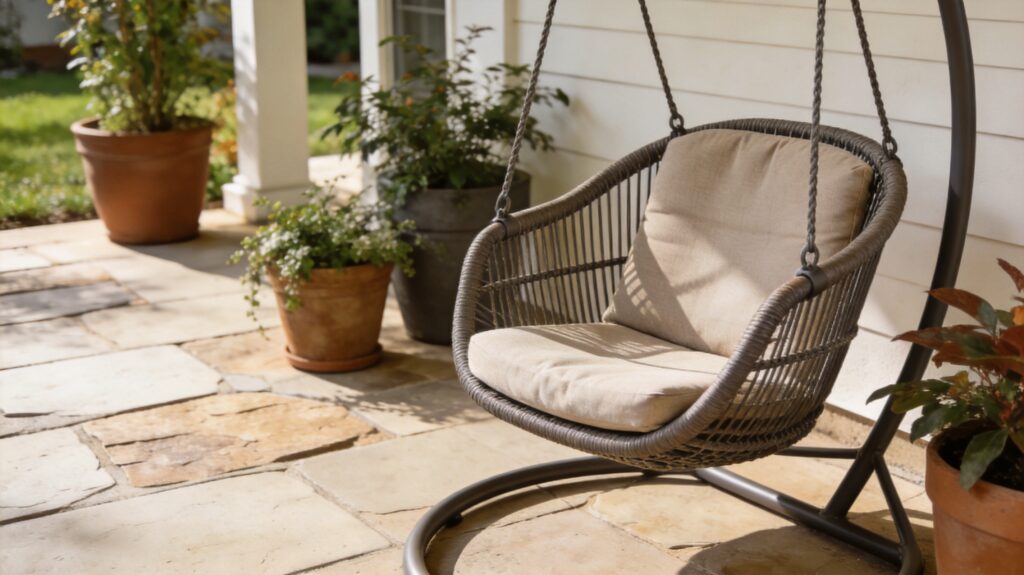
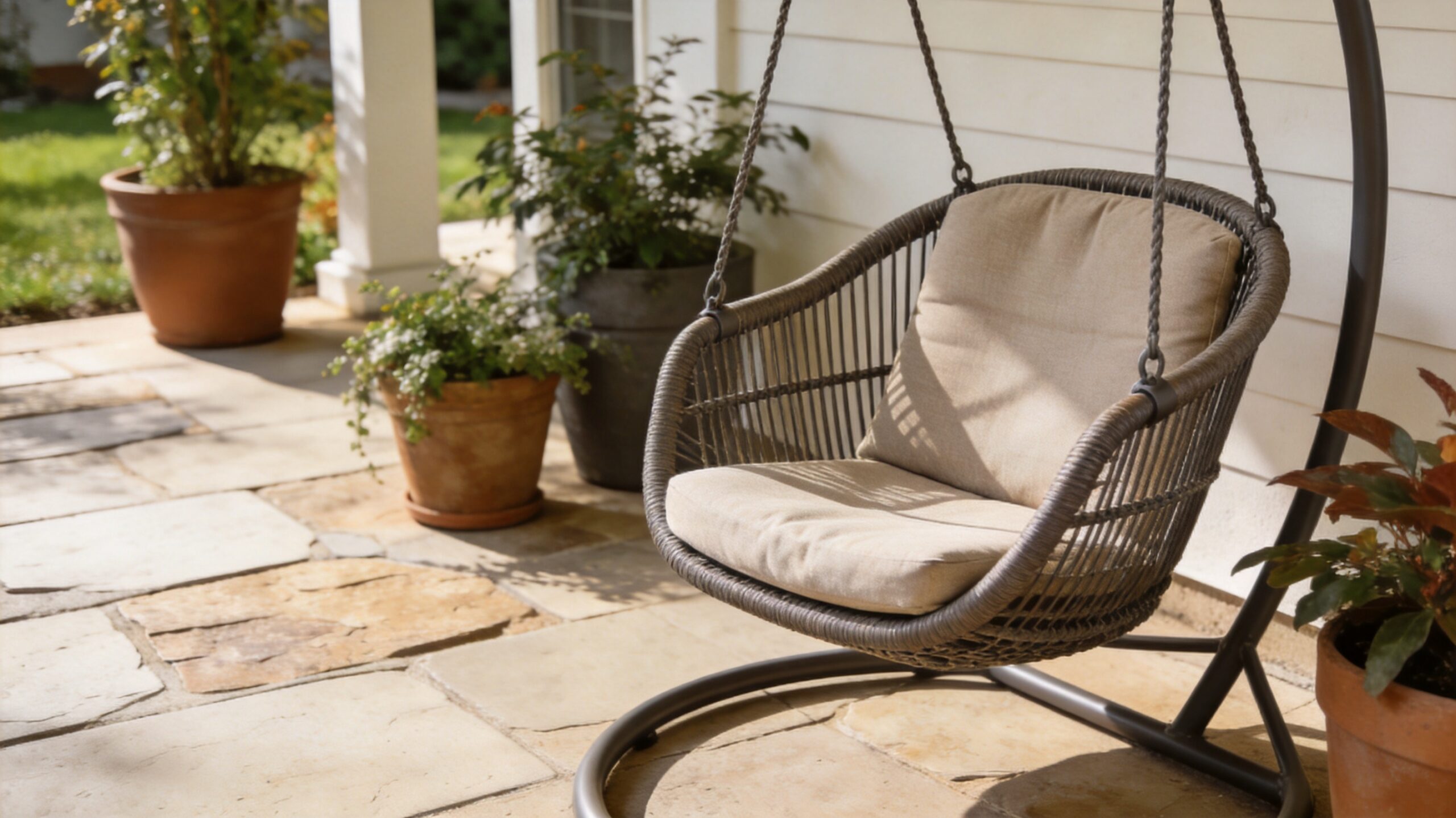
Swing chairs (also known as porch swings) offer a classic, space-efficient solution for narrow patios, balconies, and café terraces. They can be mounted to a single ceiling point and require minimal floor space. Swing chairs are excellent for high-turnover environments where guests want a quick, comfortable seating option without committing to a full lounge experience.
Hammock Chairs for High-Traffic Zones
Hammock chairs are lightweight, easy to install, and highly durable, making them ideal for high-traffic areas like family-friendly restaurants, beachfront bars, and casual outdoor dining spaces. Their open design allows for easy cleaning and quick drying. For bulk orders, hammock chairs offer the most cost-effective per-unit pricing while still delivering a distinctive guest experience. See our flying saucer hammock for a durable, modern option.
4. Comparing Wholesale Outdoor Hanging Chair Suppliers
MOQ, Lead Times, and Pricing Tiers
Before committing to a supplier, clarify minimum order quantities (MOQs), production lead times, and volume-based pricing tiers. Reliable wholesale outdoor hanging chairs suppliers should provide transparent pricing structures that reward larger orders. Be wary of suppliers with extremely low MOQs—they may lack the manufacturing capacity to handle commercial-scale orders consistently.
Certifications and Compliance Documentation
Request and verify certifications including ISO 9001 (quality management), FSC certification for wood components, and compliance with REACH or RoHS for materials. For markets like the EU or North America, ensure products meet local safety and flammability standards. A reputable supplier will readily provide these documents. For a deeper look at material standards, consult this industry reference on outdoor furniture materials.
Sample Testing and Quality Assurance
Never skip the sampling phase. Order samples of each model you’re considering and subject them to your own stress tests—weight loading, weather exposure, and assembly trials. Evaluate the quality of welds, the consistency of rattan weaving, and the smoothness of moving parts. A supplier’s willingness to accommodate sample requests is a strong indicator of their commitment to quality.
5. Logistics and Installation Considerations for Bulk Orders
Packaging and Freight Optimization
Commercial-grade hanging chairs require robust packaging to survive international or domestic freight. Inquire about packaging materials, palletization, and whether the supplier offers flat-pack options to reduce shipping volume. Optimized packaging can reduce freight costs by 15–30%, significantly impacting your total landed cost.
Assembly Requirements for On-Site Teams
Determine whether chairs arrive fully assembled, partially assembled, or as flat packs. Fully assembled chairs simplify installation but increase shipping costs. Flat-pack options require on-site assembly time and tools—factor labor costs into your total budget. Provide your installation team with clear assembly instructions and verify that all hardware is included.
Warranty and After-Sales Support
A strong warranty (typically 2–5 years for commercial products) indicates supplier confidence. Clarify what the warranty covers—frames, fabric, hardware—and the process for claiming replacements. After-sales support, including spare parts availability and responsive communication, is critical for maintaining your patio furniture over time.
6. Cost Analysis: Wholesale Pricing vs. Long-Term Value
Unit Price Breakdown by Material
Material choices significantly impact unit pricing. Powder-coated steel frames with polyester fabric typically cost 20–30% less than aluminum frames with solution-dyed acrylic. Synthetic rattan adds 10–20% to the base price. For bulk orders, negotiate tiered pricing—orders above 50 units often qualify for 5–10% discounts, while orders above 200 units can secure 15% or more. Review our product catalog to compare material options and pricing tiers.
Maintenance and Replacement Cycles
Factor in annual maintenance costs: cleaning, fabric replacement, and hardware tightening. High-quality materials reduce these costs substantially. A $300 commercial chair that lasts 8 years with minimal maintenance outperforms a $150 residential chair that needs replacement every 2 years.
Seasonal Demand and Bulk Discounts
Outdoor furniture demand peaks in spring and summer. Ordering in off-peak seasons (fall or winter) can yield additional discounts of 5–15% and faster lead times. Plan your procurement cycle to align with these seasonal pricing advantages.
7. Frequently Asked Questions for B2B Buyers
What is the typical lifespan of a commercial hanging chair?
With proper maintenance, a commercial-grade outdoor hanging chair lasts 7–10 years. Frames and hardware typically outlast fabric and cushions, which may need replacement every 3–5 years depending on sun exposure and usage intensity.
Can custom colors and branding be applied to wholesale orders?
Yes. Most manufacturers offer custom color options for frames and fabric, and many can apply your logo or branding to cushions or chair tags. Customization typically requires higher MOQs (50–100 units) and adds 7–15 days to production lead times. Contact our sales team to discuss customization options for your project.
How do I calculate the right quantity for my patio layout?
Start by mapping your patio dimensions and defining seating zones. Allow 25–30 square feet per hanging chair for comfortable spacing, including clearance for swinging motion. For mixed layouts, allocate 60% of seating to standard chairs and 40% to hanging chairs to balance comfort and visual interest. Always order 5–10% extra units to account for installation defects or unexpected demand. For additional technical guidance on load ratings and installation, refer to this technical reference.
Choosing the right outdoor hanging chair for your commercial patio is a strategic investment that affects guest satisfaction, operational costs, and brand perception. By prioritizing commercial-grade construction, verifying safety standards, and partnering with a reliable wholesale supplier, you can create an inviting outdoor space that stands the test of time. Evaluate your options carefully, request samples, and negotiate terms that align with your long-term business goals. The right hanging chairs will not only elevate your patio’s aesthetic but also deliver measurable returns through enhanced guest experience and reduced replacement costs.