
Egg Chair Spare Parts: Build a Service Reference
Use a complete-chair reference to locate the component in an inquiry. The catalogue picture does not identify an approved replacement part.
A useful egg chair spare-parts inquiry links the original chair order to a clearly identified component. Provide the product and order references, a whole-chair photograph, a marked view of the requested area and any component label already present. Ask the supplier to confirm the correct reference, availability and applicable instructions before placing a replacement order. A similar-looking part is not a confirmed match.
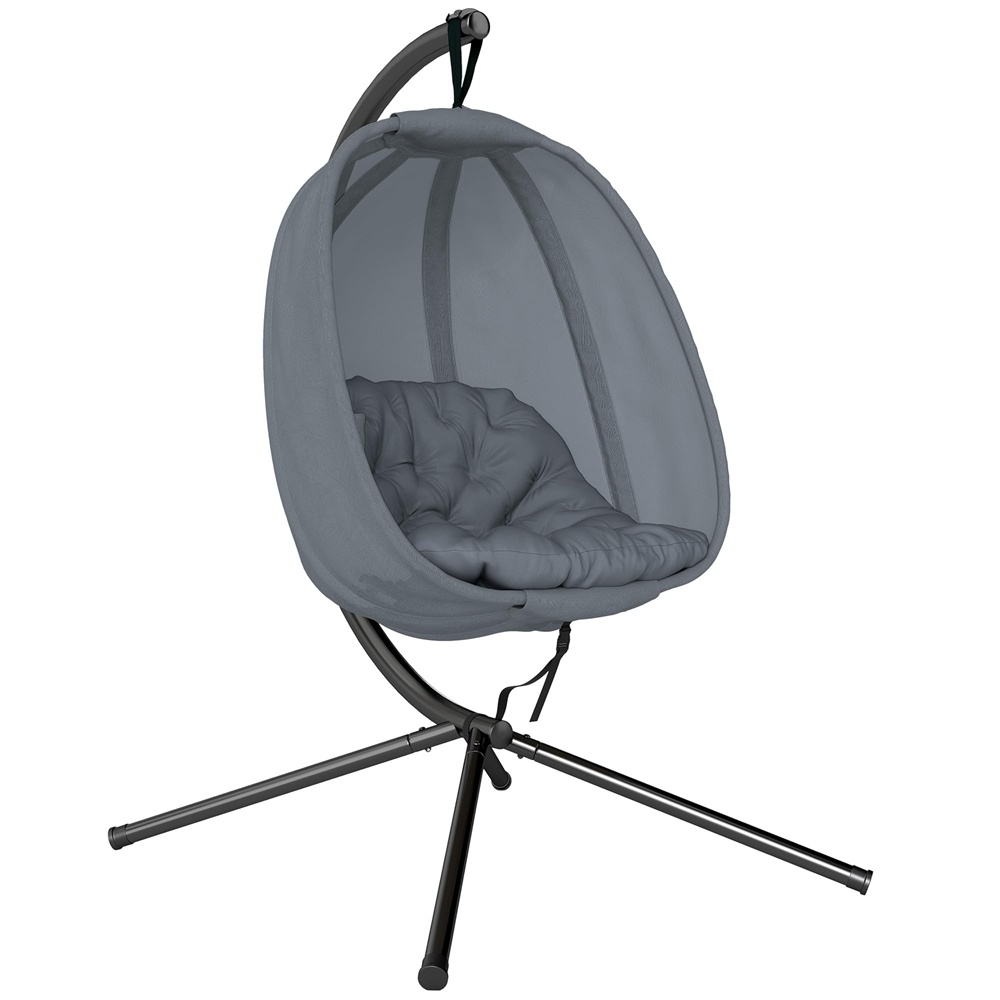
The Egg Chair Grey catalogue page shows a hanging seat, padded cushion, curved support and base. These visible areas help a buyer describe where a request belongs. The listing does not by itself establish a spare-parts catalogue or guarantee that any one component is available separately. A service reference turns a broad request for “egg chair parts” into a question the supplier can investigate.
Recover the identity of the chair already supplied
Begin with the original purchase order, invoice or other record that identifies the chair supplied. Add the supplier’s product reference and order date where available. Keep the original product link as a supporting reference, and note any label or version marking on the physical item. If records are incomplete, state what is known and ask the supplier what else is needed.
Do not replace a missing order identity with the title of the closest-looking current listing. A business may have bought several grey chairs at different times, and the catalogue may have changed since those purchases. Keep each existing chair group tied to its own supply record until the supplier confirms which items can share a component reference.
Show the component in place before its close view
Take a whole-chair photograph to show the component’s location. Add a marked image that points to the exact item requested, then provide a close view of its label or distinctive features. Keep the original unmarked image as well. A short, consistent photo sequence is easier to interpret than a close-up that leaves the supplier guessing where the part belongs.
Use ordinary location descriptions such as the cushion inside the seat or the support beside the hanging seat, then ask for the supplier’s official component name. If several pieces are involved, give them separate buyer references rather than one circle around an entire assembly. Buyer references organise the inquiry; they do not create supplier part numbers.
The angled catalogue view can help explain a component’s location within the chair. For service identification, add photographs of the actual item supplied.
Describe the request without deciding its cause
State what the customer or warehouse has observed and what outcome is requested. For a missing item, identify the package or order record involved. For a different appearance or other concern, provide a close photograph and a plain description. Keep the observed condition separate from an explanation of why it happened, unless that explanation has been established.
An after-sales team can then ask the supplier whether the matter needs another photograph, a document check, a replacement quotation or a different response. Do not describe an open inquiry as an accepted warranty claim. The applicable commercial terms, responsibility and remedy need confirmation for the actual order and circumstances.
Service-reference field | What the buyer supplies | What the supplier confirms
Original chair identity | Order reference, product code and any version label | The supplied chair version to which the request applies
Requested component | Whole-chair location and marked photograph | Official component name and reference
Observed condition | Plain description and relevant close views | Any further information needed for assessment
Replacement scope | Quantity and intended chair group | Whether a part, assembly or kit can be offered
Relationship to the chair | Existing part markings and original supply record | The appropriate match and any stated restrictions
Commercial response | Delivery destination and purchasing contact | Availability, price, timing and applicable terms
Instructions | The service task being proposed | Applicable fitting or handling instructions
Ask exactly what a replacement offer includes
If the supplier can offer a replacement, ask whether the quotation covers one component, a complete assembly or a kit. Request an itemised contents list so the receiving team knows what should arrive. A photograph of an assembled chair does not define which fittings or accessories are included in a separately quoted service item.
Check the quantity basis as well. A request for one replacement set may be understood differently by purchasing and the seller. Put the supplier-confirmed component reference and contents into the order line. Ask whether any existing pieces are to be retained and request the instructions applicable to the proposed replacement. Avoid combining parts from different chair versions based on appearance.
The catalogue detail highlights the cushion area and contains supplier annotations. It can locate a request, but does not establish separate-component availability or compatibility.
Keep support-related decisions with the supplier
For a component involved in hanging or supporting the chair, obtain the supplier’s specified replacement and applicable fitting instructions. Do not improvise a substitute from a similar-looking item or treat a successful visual comparison as a performance check. Where the supplier requires a particular service route or further assessment, include that response in the record before arranging the work.
The same discipline helps with a cushion request, although the questions differ. Confirm the exact cushion version and supply scope rather than extending a reference to every chair with a grey cushion. The service record should say what has been confirmed and leave an unresolved match visible instead of encouraging the next team member to guess.
Make the answer usable for the next service request
Save the supplier response beside the original order and marked photographs. Record the confirmed component reference, quoted contents and any limitation stated by the supplier. If a replacement is ordered, keep its purchase record linked to that service case. A later colleague can then distinguish an earlier inquiry from a component that was actually confirmed and supplied.
Use a status such as identification pending, supplier response received or replacement ordered.
Keep availability and lead-time responses dated, since they relate to that inquiry.
Return to the supplier when the chair version or proposed replacement changes.
Submit the original chair reference and component photo sequence through Changxiang Household’s contact page. The blog offers broader purchasing context; the service reference carries the information needed to investigate this particular request.
Frequently Asked Questions
Does the catalogue guarantee spare parts are stocked?
No. Ask about the specific component, quantity and chair version. Record the supplier’s current response rather than treating a product listing as a stock commitment.
Can another egg chair use the same replacement because it looks similar?
That relationship needs confirmation from the supplier for the relevant versions. Similar colour or overall shape does not establish a compatible component.
What if the original order reference is missing?
Provide the information still available, including labels, approximate purchase timing and whole-chair photographs. Ask the supplier which additional records it needs before identifying or quoting a replacement.
Hanging Egg ChairsAfter-Sales SupportComponent IdentificationSpare Parts InquirySupplier Documentation